WAITING ROOMS
There were whole stretches of my life that no one ever saw. Not the kids, not the neighbors, not the other parents on the sidelines. They saw the Little League coach, the involved father, the Cub Scout chaperone, the guy who could back a camper into a tight spot on the first try.
What they didn’t see were the hours I spent in waiting rooms.
Not dramatic hours. Not tragic hours. Just lost hours — the kind that evaporate under fluorescent lights.
Appointment times were rules for patients, suggestions for doctors. Everyone in those chairs knew it.
I dissected every one of those rooms. The worn boating, golf, and home‑decor magazines — refreshed twice a year by someone who didn’t read them. The crooked switch plates, the water‑stained ceiling tiles, the neglected children’s corner. The flat‑screen looping pharmaceutical ads disguised as health tips, meant to distract you from the wait while doing the opposite as the same segment rolled by for the sixth time.
These rooms were a signal that the system wasn’t built for the people inside it. That your time didn’t matter.
And this was the backdrop of the opioid years — not the pills, not the headlines, not the crisis as the world framed it. It was the hours. The fluorescent purgatory. The quiet erosion of dignity by clipboard.
People didn’t walk into that system because they were reckless. They walked in because they were hurting — in their bodies, in their lives, in the places no one sees — and the doorway looked like care.
The tabloids called them “pill mills.” But the truth was quieter, more ordinary. It lived in the waiting rooms, in the delays, in the way the world kept moving while you sat still.
And here’s the part no one saw: I lived this alone. Between baseball practices and school concerts, between campouts and grocery runs, I was burning hours in rooms no one else ever thought about.
Years later, I stopped letting those rooms define the terms. First visit, I say something. If I see a problem, I name it. No one else will.
And it works. I’ve watched waiting rooms change because I pointed out what everyone else ignored. I’ve watched doctors listen — really listen — and when they fix the thing I mentioned, it adds a layer of trust you can’t fake.
It’s my version of no brown M&Ms — a small test that tells me everything I need to know about whether this doctor is here for more than the paycheck. These weren’t the loud years. These were the in‑between years, the ones that shaped everything quietly, in rooms where no one was watching.
OPIOID YEARS – Lyrics
There was a time when pain wasn’t just pain — it was a doorway.
The tabloids called them Pill Mills. A quiet invitation into a system that looked like care on the surface and something far more tangled underneath.
People didn’t walk into it because they were reckless.
They walked in because they were hurting —
in their bodies, in their lives, in the places no one sees —
and a doctor said “this will help”.
Because the world doesn’t pause for life,
or loss,
or hardships.
And the pills worked, at first.
They softened the edges.
Let co‑workers show up like everything was fine.
Let parents’ parent.
Held families upright.
But behind the counter, another machine was running.
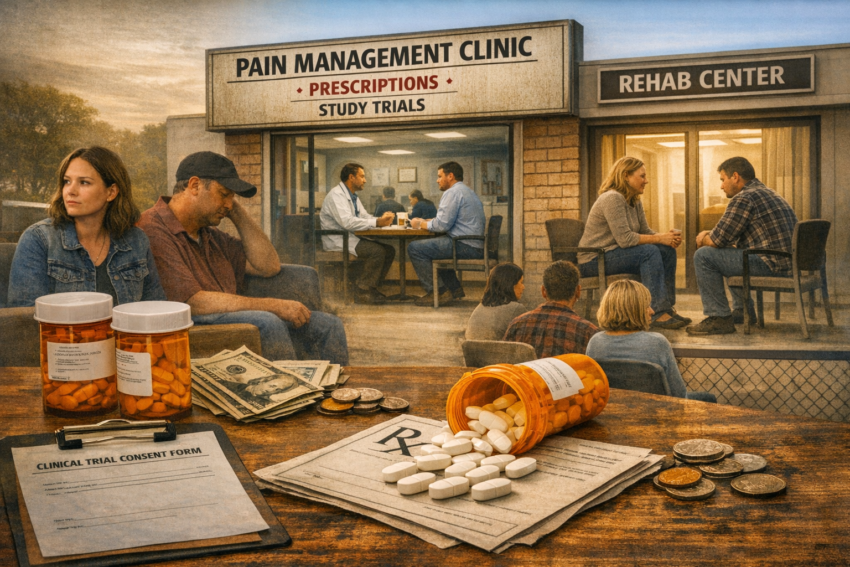
The doctors who wrote the prescriptions
were the same ones nudging patients toward paid trials.
“Easy money,” they’d say.
“Just a study.”
And the same faces kept showing up —
people numbed on long‑acting opioids,
trying to keep their lives stitched together
one envelope of study cash at a time.
Then the crackdown came,
and the story flipped overnight.
The very clinics that fed the dependency
became the ones accusing patients of “abuse.”
The same doctors who taught people how to ask for higher doses
opened treatment centers
and called it help.
The people caught in the middle weren’t villains.
They weren’t cautionary tales.
They were neighbors,
workers,
parents,
trying to survive a system that shifted the blame onto them
the moment the spotlight hit.
Some quit in groups.
Some quit in facilities.
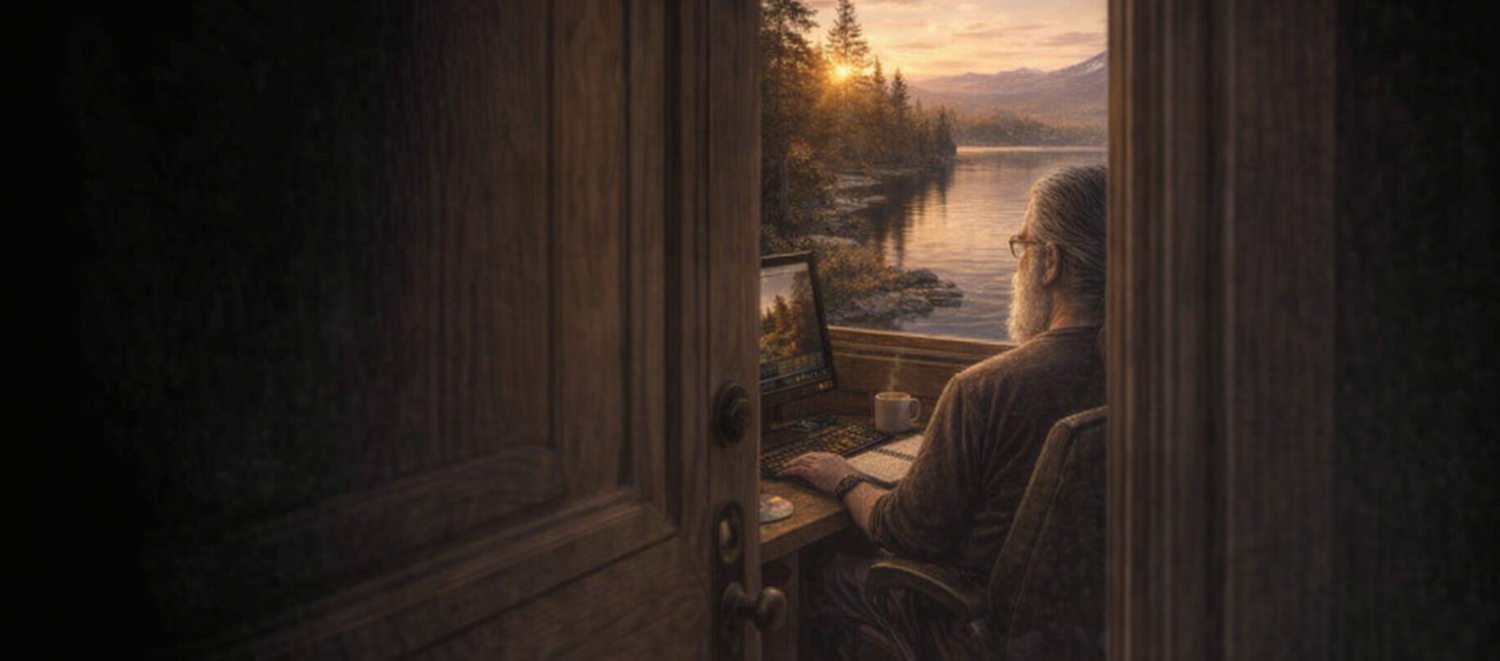
Some quit alone in dark rooms
with sweat‑soaked sheets
and pain that felt older than their own bodies.
Some made it.
Some didn’t.
Most never spoke of it again.
And the ones who walked away
didn’t do it because they found enlightenment.
They did it because the cost became too high,
because the pain of withdrawal was still better
than the pain of being owned by a pill.
They carried their original pain with them —
whatever form it took —
as a reminder of what they survived
and what they refused to return to.
These were the opioid years.
Lived in waiting rooms,
in pharmacies,
in test facilities,
in bedrooms with the lights off.
Years where ordinary people were told they were the problem
when the problem was the system built around them.
Not a confession.
Not a warning.
Not a tragedy.
Just the truth of a time
shared by more people than anyone will ever count.
A truth that belongs to all who lived it,
whether they ever speak it aloud or not.
Words by Rick. Performed by Suno.