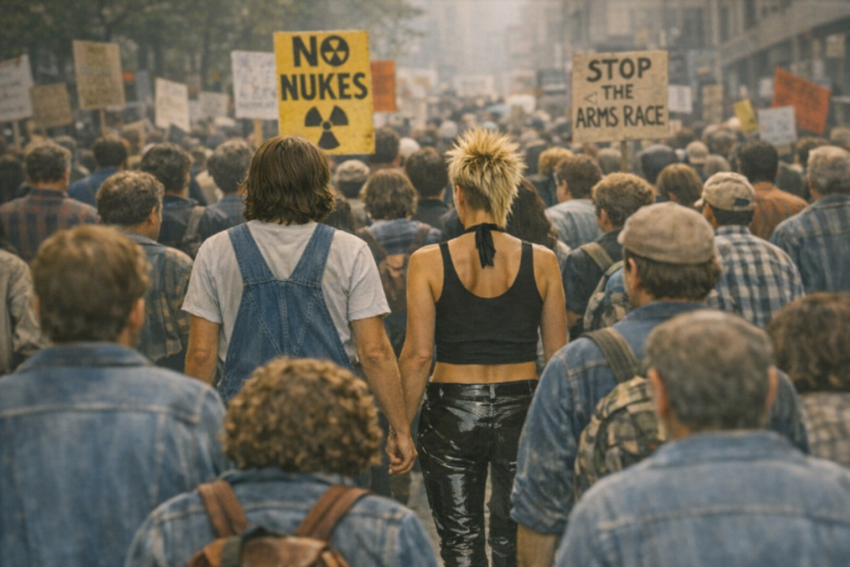
I was eighteen, I bought a ride on a church‑fundraiser bus from Guilford to the No Nukes rally in Central Park. Long‑haired country kid by himself, denim overalls, no plan beyond showing up. I stepped off the bus into a sea of people and somehow fell into stride beside Wendy O. Williams.
Not performing. Not onstage. Just walking.
She talked with that raspy, sandpaper voice that sounded like she’d smoked a hundred cigarettes before breakfast, even though I never saw her light one. Her energy surprised me — happy, present, tuned in. No attitude. No armor. Just a woman enjoying the day.
Her whole look was engineered to provoke a reaction: the Mohawk, the leather, the silhouette that made strangers stare. She carried herself like someone who expected the world to flinch.
Everyone did. Except me.
I didn’t gawk or treat her like a spectacle, and she picked up on that instantly. She gave me big‑sister energy, like she’d decided I was her kid brother for the afternoon. We walked for what felt like miles. I don’t remember a single word we said — not one — but I remember the feeling. That’s how dream‑state moments work. The dialogue evaporates, but the temperature stays.
I knew it was her right away. No slow realization. No “wait a second.” One moment I was alone in the city, the next I was walking beside Wendy O. Williams like it was the most natural thing in the world.
When we reached the park, I turned my head and she was gone. No goodbye. No wave. Just disappeared into the crowd like she’d stepped out of a frame.
It’s remembered like a dream, but it happened. And forty‑plus years later, the walk is still vivid — the where’s and when’s are the blur.